Autoflowering cannabis offers one of the greatest opportunities for innovation in modern breeding programs, driven by its inherently rapid growth cycle and broad environmental flexibility. Although early autoflower varieties were often associated with limitations such as low potency, undesirable aromas, or small plants, advances in plant genomics are redefining what these plants can achieve.
At Phylos, we combine genomic tools with traditional plant breeding to better understand the genetic architecture behind autoflowering and to develop stable, high performing seed-grown varieties. This article explores the science behind autoflowering, the genetic mechanism that enables day-neutral flowering, and the role that marker assisted breeding now plays in producing consistent and reliable autoflower lines for growers of every scale.
What Is an Autoflower Plant?
Cannabis traditionally flowers in response to changes in day length. Plants transition from vegetative growth to flowering when they detect shorter days. Autoflower cannabis plants behave differently. They initiate flowering based on age rather than photoperiod. This trait was first observed in what is often referred to as ruderalis, or plants adapted to northern regions with long days and short growing seasons. Integrating this trait into commercial breeding programs allows cultivators to achieve:
- Rapid cycles and predictable harvests
- Reliable performance across diverse environments
- Simplified production with lower touch and fewer light-management inputs
As Cenica Ballantyne, Lead Grower at our R&D partner facility, explains, autoflowers are like “a seed on a timer.” Autoflowers are well-suited for outdoor, greenhouse, and indoor production where labor efficiency and cycle time are critical.
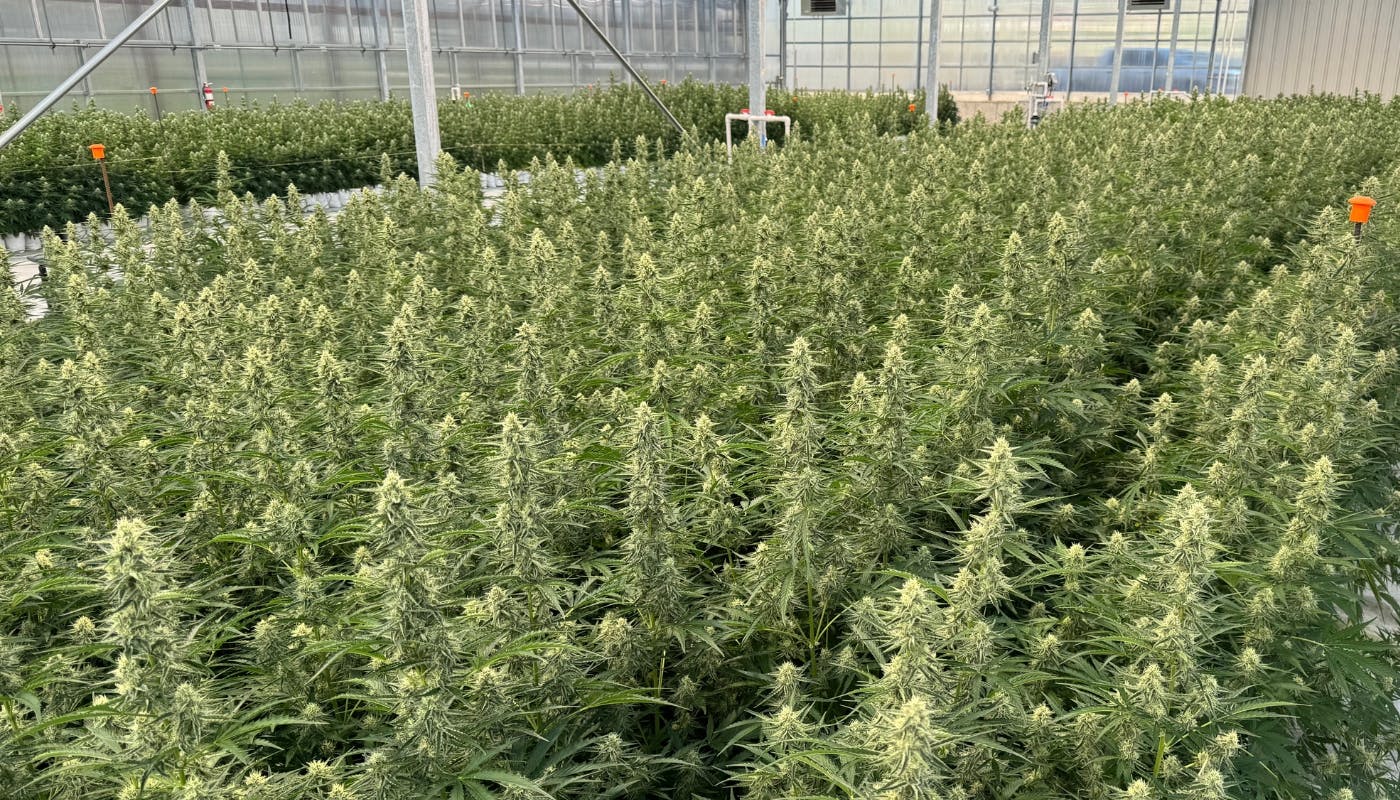
Phylos autoflower variety, Zesty Parm
The Gene Behind Autoflowering: What Makes Plants “Bloom on Their Own”?
At Phylos, marker-assisted selection (MAS) is central to how we breed for precision. Rather than relying on observation alone, we integrate genomics at every stage, screening thousands of genetic data points across the cannabis genome to identify regions associated with key agronomic traits.
Using genetic mapping and bulked segregant analysis across 105 accessions, we pinpointed a recessive locus on chromosome 1 responsible for this autoflowering behavior.
Each point on the Manhattan plot below represents a SNP (single nucleotide polymorphism), with height representing strength of association with the trait. The peak signals allowed us to isolate and validate the autoflowering locus.
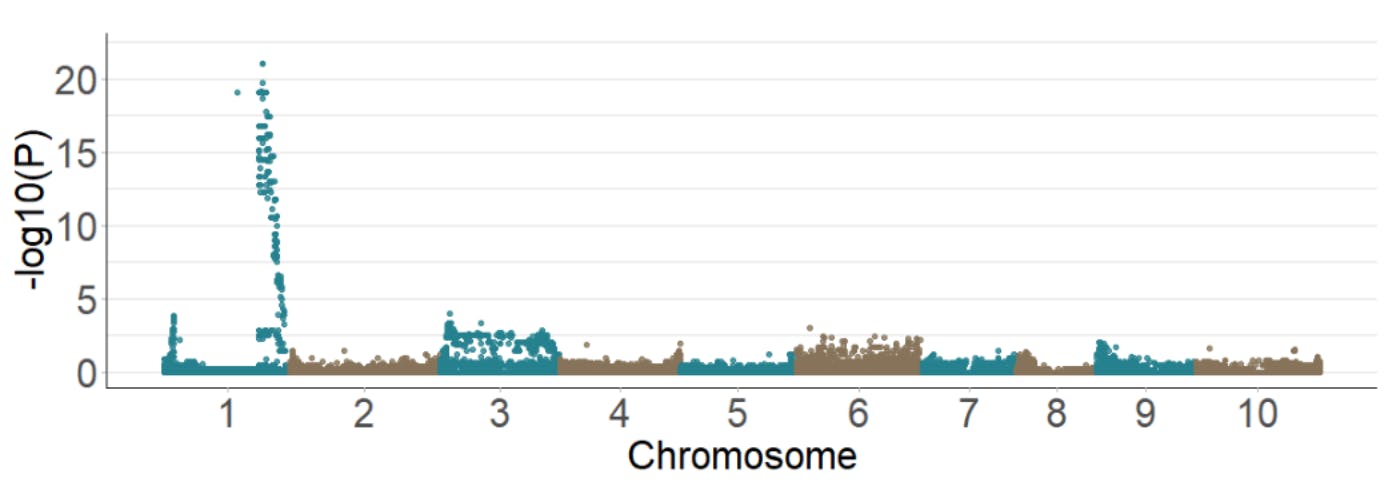
Through this large-scale genetic mapping work, we identified a key flowering repressor gene: PRR37/PRR3.
How PRR37 Works
- In photoperiod plants, PRR37 acts as a brake that prevents flowering until day length changes signal the plant to transition.
- In autoflower plants, a mutation disables that brake. Without PRR37’s light-dependent signal, the plant flowers automatically after a certain period of time.
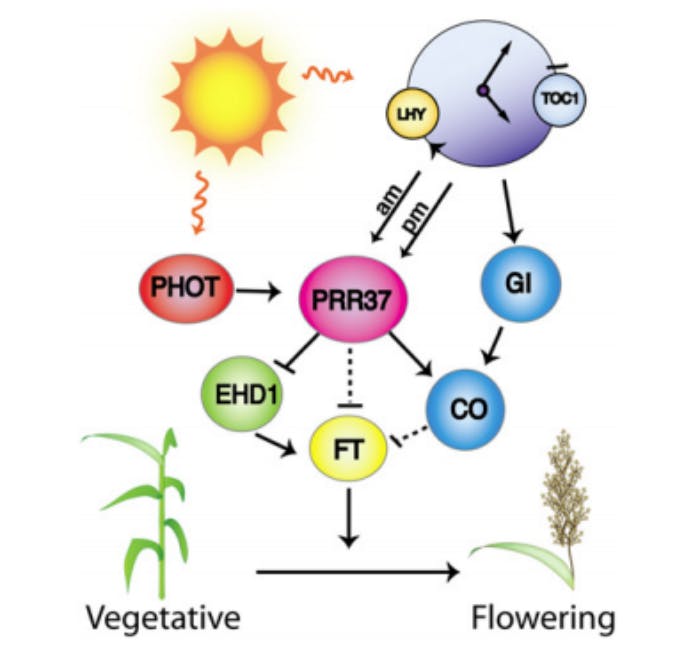
Murphy et al. 2011
This discovery provides a genetic foundation for consistent autoflower trait inheritance and accelerated breeding innovation at scale.
Want to learn more about genetic markers? See our companion post: How Genetic Markers Are Advancing Cannabis Breeding.
How Modern Science Is Advancing Autoflower Breeding
Early autoflower hybrids carried a reputation for low potency, weak aromas, or low yields. But those limitations reflected the genetics available at the time, not the trait itself.
Today, modern breeding has transformed autoflowers. At Phylos, we use genomic tools, precision phenotyping, and marker-assisted selection to breed autoflower varieties that match (and sometimes exceed) the quality of photoperiod lines.
Phylos’ Breeding Strategy
We begin with high-performing photoperiod parents selected for:
- High potency
- Stress tolerance
- Unique aromas and terpene expression
- High yields
- Commercial uniformity
We then introgress the autoflower version of the PRR37 gene into these elite lines through a strategic backcrossing program. With genetic markers, we can identify the autoflower trait early in development, long before flowering, allowing us to build reliable, uniform populations with predictable cycle times.
How the Autoflower Trait Is Inherited
Breeding for the autoflower trait follows classic Mendelian inheritance. Here’s a simplified view:
1. Photosensitive parent (PP) × autoflower parent (pp)
-> All F1 plants are Pp (photosensitive but carrying the recessive autoflower allele).
2. F1 × F1 cross
-> F2 generation includes:
• PP (photosensitive)
• Pp (photosensitive carriers)
• pp (autoflowering expression)
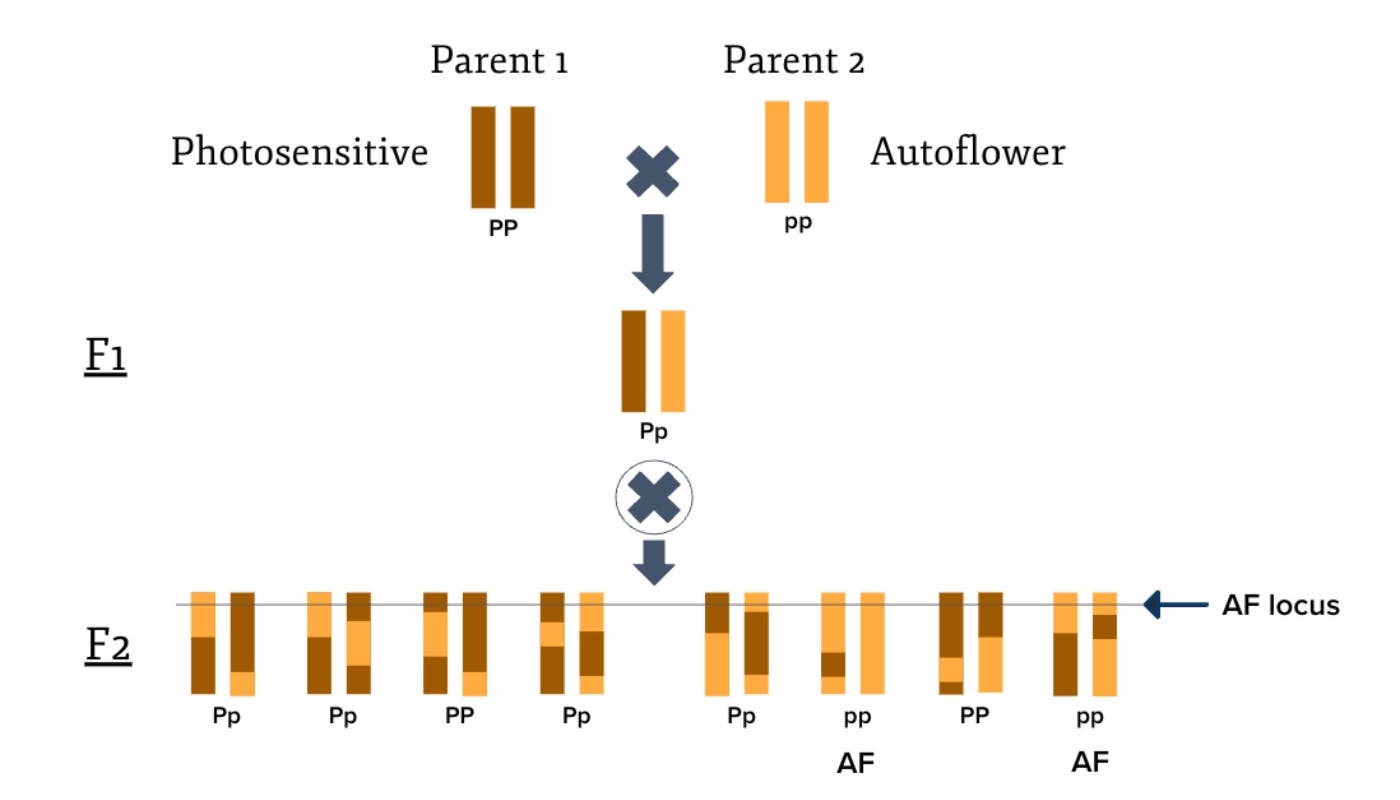
By using genetic markers to precisely track the AF locus, we can:
- Confidently select plants carrying the autoflower trait early in development.
- Build stable, uniform populations with consistent flowering times.
- Combine autoflower genetics with other valuable traits like stress tolerance, yield potential, and cannabinoid and terpene expression.
Benefits of Phylos Autoflower F1 Hybrid Seeds
Phylos autoflower genetics empower growers to produce high quality flower while streamlining operations and reducing costs.
Key advantages include:
1. Faster Cycle Time
• Sow-to-harvest in 65-75 days
• Up to 30 days faster than typical photoperiod varieties
2. Elevated Potency and Yield
• Potency levels reaching up to 30% THC
• High flower to biomass ratio
• Bred to compete with top-performing photoperiod lines
3. Consistent, Uniform Performance
• Marker-assisted breeding ensures reliable growth traits
• F1 hybrid of inbred parent lines enhances uniformity, helping seed-grown plants rival clone consistency
4. Operational Flexibility & Efficiency
• No blackout systems or light-schedule management
• Direct sowing into final media
• Predictable harvest windows ideal for labor management and speed-to-shelf
• Less plant maintenance like deleafing
Real-World Performance
In a Michigan grow, two Phylos autoflower varieties, Zesty Parm and Bumper OG, each produced over 600g wet weight per plant, with Zesty Parm testing at 28% THC. Both reached full maturity by late July, demonstrating the power of fast, reliable autoflower genetics for seasonal optimization.

Image: Zesty Parm (left) and Bumper OG (right)
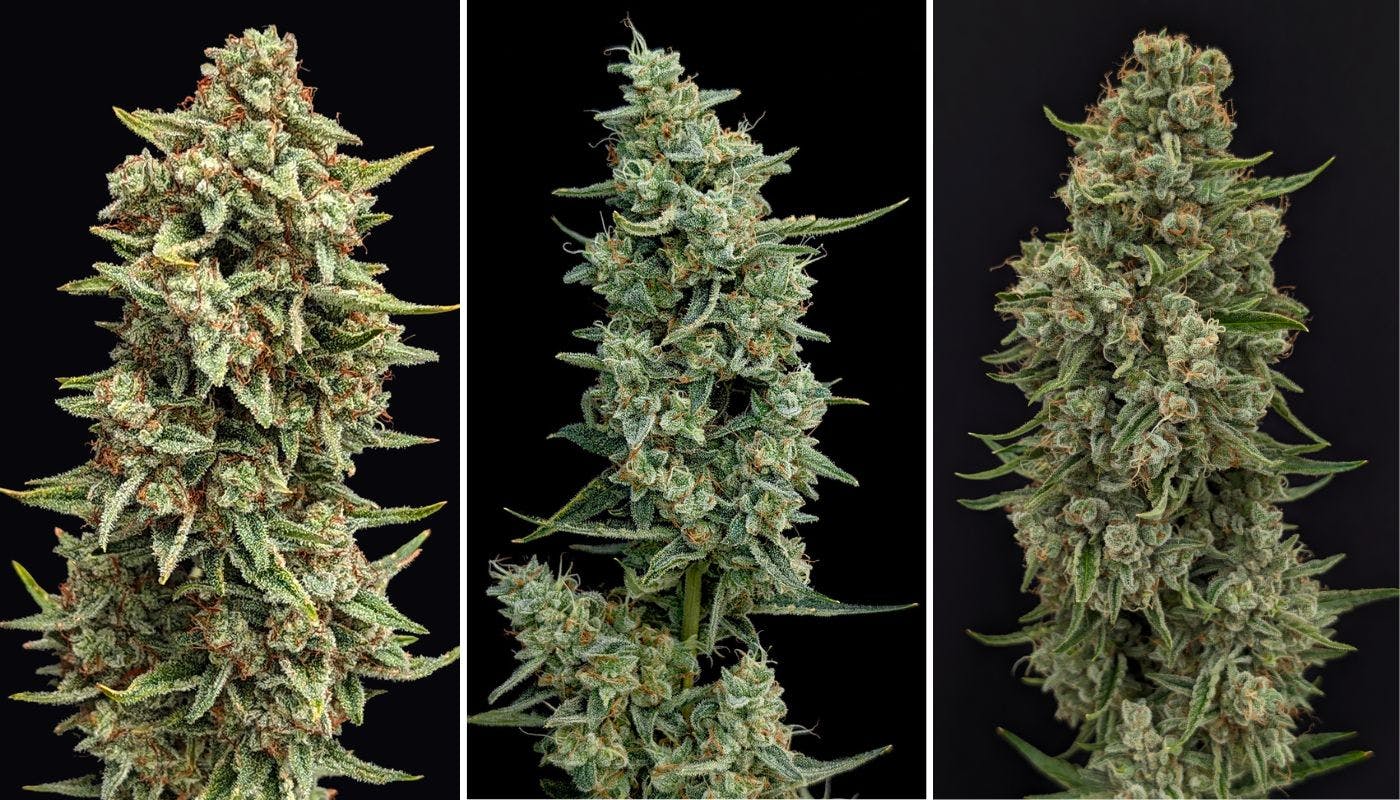
Images: Zesty Parm, Sasquatch Breath, Frodo Squeeze
At an indoor facility in Washington, customers running Sasquatch Breath and Frodo Squeeze shared that “Phylos seeds are even better than [photosensitive] clones.” Their experience highlights the consistency and performance growers can expect from Phylos F1 hybrid autoflower genetics.
Watch the Phylos 2025 Autoflower Showcase video to see our latest autoflower varieties at peak maturity.
See the Phylos Difference for Yourself
At Phylos, we pair scientific precision with a deep understanding of cannabis to deliver reliable, uniform, high-performing seed-grown plants. Our next-generation autoflower genetics prove that growers no longer have to choose between speed and performance.
To explore our genetics or speak with our team, email customersuccess@phylos.bio.