Experienced cannabis consumers and connoisseurs are increasingly willing to pay a premium for solventless concentrates, driven by their ability to preserve the plant’s full spectrum of cannabinoids and terpenes while delivering a cleaner, more authentic expression of the cultivar.
This premium positioning is further reinforced by the production process itself. Techniques like ice water extraction and dry sieve mechanically separate trichomes from plant material without the use of solvents, producing a high-end concentrate that commands top-tier pricing.
At the center of this process is a key trait: washability.
What Is Washability?
Washability refers to how efficiently trichomes can be separated from cannabis flower during ice water extraction. From a production standpoint, washability is often expressed as:
Total bubble hash yield % = total dry hash output ÷ starting dry material weight × 100
This standardization enables meaningful comparisons between cultivars and across environments and processing styles.
Washability is just one step in the solventless production process, with the resulting hash serving as the foundation for a range of products, including rosin and other solventless concentrates.
Why Washability Matters for Growers and Processors
Experienced consumers are increasingly seeking cleaner, higher-quality products, creating opportunities for cultivators to differentiate their offerings and maintain stronger margins in highly competitive markets. As demand for premium solventless concentrates grows, washability has become an increasingly important trait. For growers and processors alike, strong washability is more than a technical characteristic: it directly impacts efficiency, product quality, and overall profitability.
Washability directly influences:
- Yield efficiency (producing more hash per pound of flower)
- Processing throughput (reducing time and labor per unit output)
- Product quality consistency
- Economic return per harvest
By selecting and cultivating genetics with strong washability traits, producers can move beyond trial-and-error approaches and toward more predictable, scalable outcomes.
What Makes a Good Washer?
High-performing “washer” cultivars share a combination of structural traits that promote efficient trichome separation:
- Large trichome heads with high resin content
- Weak trichome necks, allowing heads to detach easily during agitation
- High trichome density across flower surfaces
- Open flower architecture, which increases the exposed surface area of trichomes for mechanical separation
These traits directly influence how readily trichomes release during washing, impacting both yield and processing efficiency.
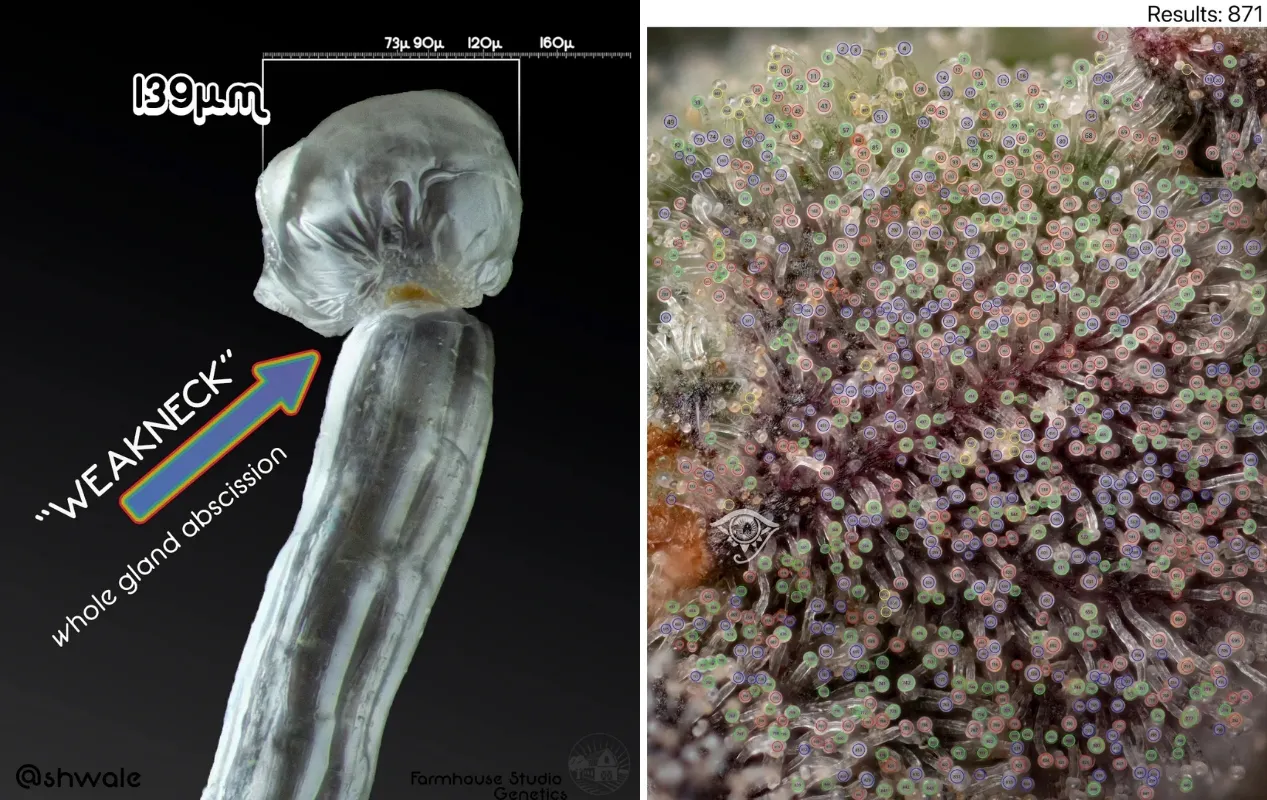
Image: Weak trichome neck (1) high trichome density (2) Shwale / Farmhouse Studio Genetics; via Lowtemp Industries, “Advancements In Cannabis Genetics with Shwale from Farmhouse Studio,” June 3, 2024.
The term “washer” refers to plants whose yield is relatively high when extracted using a solventless process like an ice water bath. When extracting with solvents like ethanol, the yield correlates closely to the potency, but in a solvent-less process that correlation is not so tight as the shape of the trichomes has an outsized impact on the amount of bubble hash that's produced.
The Role of Genetics in Washability
Washability is not just a function of processing, it is a genetically influenced trait that can be measured, mapped, and selected for.
To better understand the genetic basis of washability, Phylos evaluated a diverse population of 436 cannabis plants, each genotyped using a custom Illumina bead array. Plants were grown under controlled greenhouse conditions, and washability was quantified using fresh frozen flower material and a miniaturized extraction assay, generating precise measurements of wash yield (mg trichomes per gram of flower).
Using this dataset, nested association mapping (NAM) was performed to identify genetic variants associated with washability. This analysis revealed specific naturally occurring Single Nucleotide Polymorphisms (SNPs) linked to improved wash extraction performance.
From this work, major genetic loci strongly associated with washability were identified and validated on two distinct chromosomes, confirming that the trait has a measurable and heritable genetic component.
Put more simply:
- A large population of plants (400+) was evaluated for wash performance
- Genetic mapping identified key regions associated with higher washability
- Plants carrying beneficial variants consistently showed improved wash yield
These discoveries enable a shift from observational selection to predictive breeding.
By deploying these markers in breeding programs, it becomes possible to:
- Identify “good washers” earlier in development
- Select for cultivars with consistently high wash or potentially dry sieve yields
- Maintain desirable aroma, flavor, and metabolite complexity
This marker-assisted selection approach allows breeders to stack favorable traits more efficiently, accelerating the development of cultivars specifically optimized for solventless extraction.
As a result, washability is no longer just something discovered at harvest, it can now be developed into a cultivar from the start, improving both production efficiency and final product quality.
Purple Hash, Anyone?
Not all resin looks the same. Some cultivars produce striking purple trichomes and hash, creating visually unique solventless products that stand out immediately on the wash table and in the jar.
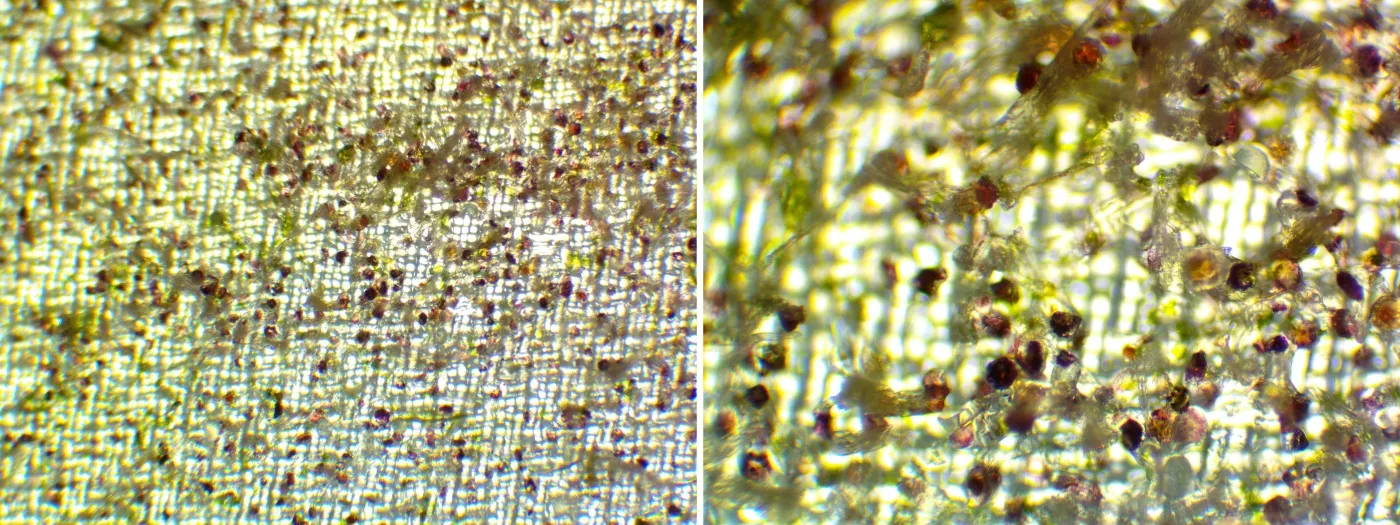
Images: Purple trichomes captured during wash filtration (photo by Kelley Bastin, Research Lab Technologist, Progressive Plant Research, Phylos’ R&D partner facility).
Purple coloration in cannabis resin is driven primarily by anthocyanins, naturally occurring flavonoid pigments also found in grapes, blueberries, and blood oranges. These compounds can accumulate in flower tissue and, in some cultivars, extend into the trichome heads themselves. Genetics play the biggest role, though cooler temperatures during late flower can intensify purple expression.
Learn more about how specific genes control color expression from Phylos’ Chief Scientific Officer, Alisha Holloway, PhD, in our video, “Purple Reign: Genetic Markers for Flower Color”.
How Phylos Tests Washer Varieties
Because washability is influenced by both genetics and process, standardized measurement is critical.
Phylos quantifies washability using dry hash yield as a percentage of starting material, requiring:
- Starting material weight (fresh frozen or dried) corrected for moisture content
- Final dried hash weight after processing
This approach isolates the genetic contribution to wash performance by anchoring comparisons at the wash stage rather than downstream processes like pressing, which introduce additional variability.
To generate consistent, comparable data, Phylos developed a miniaturized washability assay that mirrors commercial extraction conditions at small scale.
Phylos Miniaturized Washability Assay
- Fresh frozen flower is collected and stabilized at low temperatures
- Samples (~4 g) are prepared and placed in ice water
- Tubes are agitated for 10 minutes at a controlled speed
- Plant material is filtered out, allowing trichomes to pass through
- Trichomes are captured on a fine filter, dried, and weighed
This method gives a final yield of trichomes based on the starting amount of flower, and enables precise, repeatable measurement of washability across hundreds of plants.
Second Party Validation
Validation from a second party gives side-by-side comparisons for Industrial Scale Washing vs. Phylos Miniaturized Washability Assay Method and shows that:
- Rank order of varieties is consistent between the miniaturized assay (4g) and industrial washing (50 lbs fresh frozen flower)
- Overall recovery levels are similar across methods
This means small-scale testing reliably predicts real-world performance.
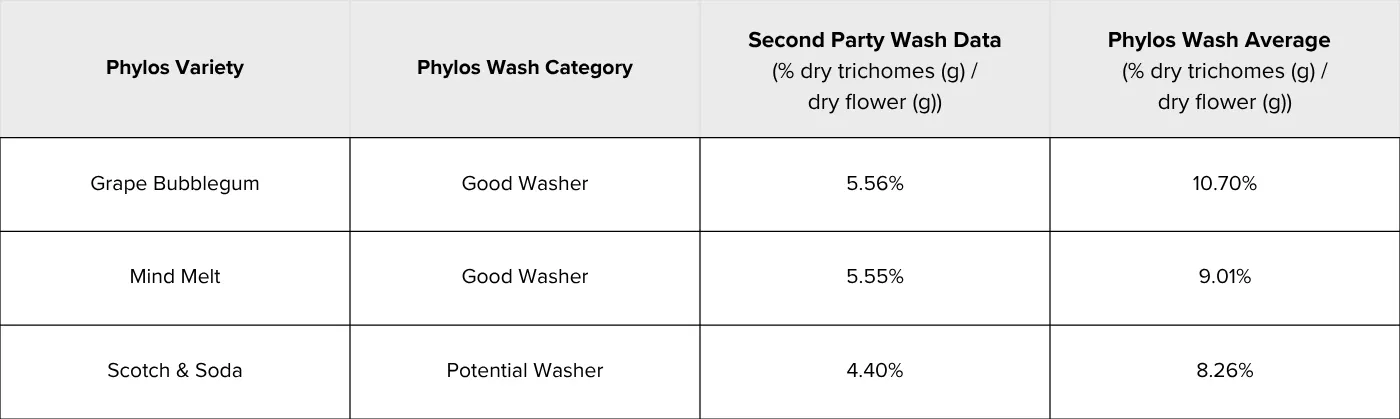
Wash is calibrated based on a standard high wash check plant which tests at 12.4%. The correlation is strong in the table above. Phylos’ miniaturized wash gives a relative quality of each variety as a washer.
Real-World Performance: Partner Insights
Washability doesn’t exist in a vacuum, it plays out across different grow environments, harvest methods, and processing styles.
To capture this variability, Phylos works with partners to collect:
- Yield data across environments
- Comparative benchmarks against top and bottom-performing cultivars
- Qualitative feedback on processing and final product
This approach allows results to be interpreted as ranges within real production contexts, rather than single-point estimates.
Partners consistently emphasize the reliability, uniformity, and standout performance of Phylos genetics:
“Phylos are experts in the science of cannabis cultivation. At Drops we need strains with consistent effects and high yield / washability, so working with Phylos has been a no-brainer” — Oliver Neill, Director of Executive Operations, Drops.
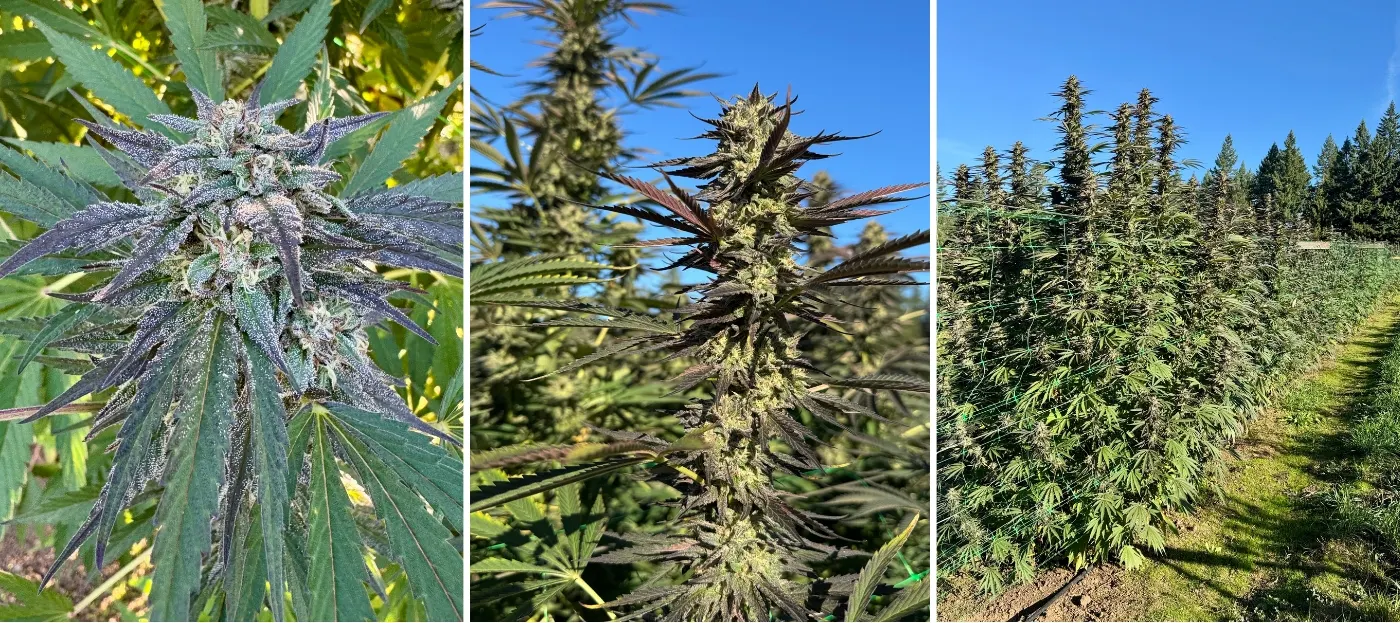
Images: Grape Bubblegum grown at Drops Candies’ Hillsboro, OR outdoor facility.
"After several seasons of testing, we've seen great success with a number of cultivars such as Grape Bubblegum and Purple Starfruit in terms of plant uniformity and yield consistency throughout. Coupled with distinct flavor and aroma profiles, this further solidifies Phylos genetics' quality." — Sherri Kuo, CEO, Mokotoke
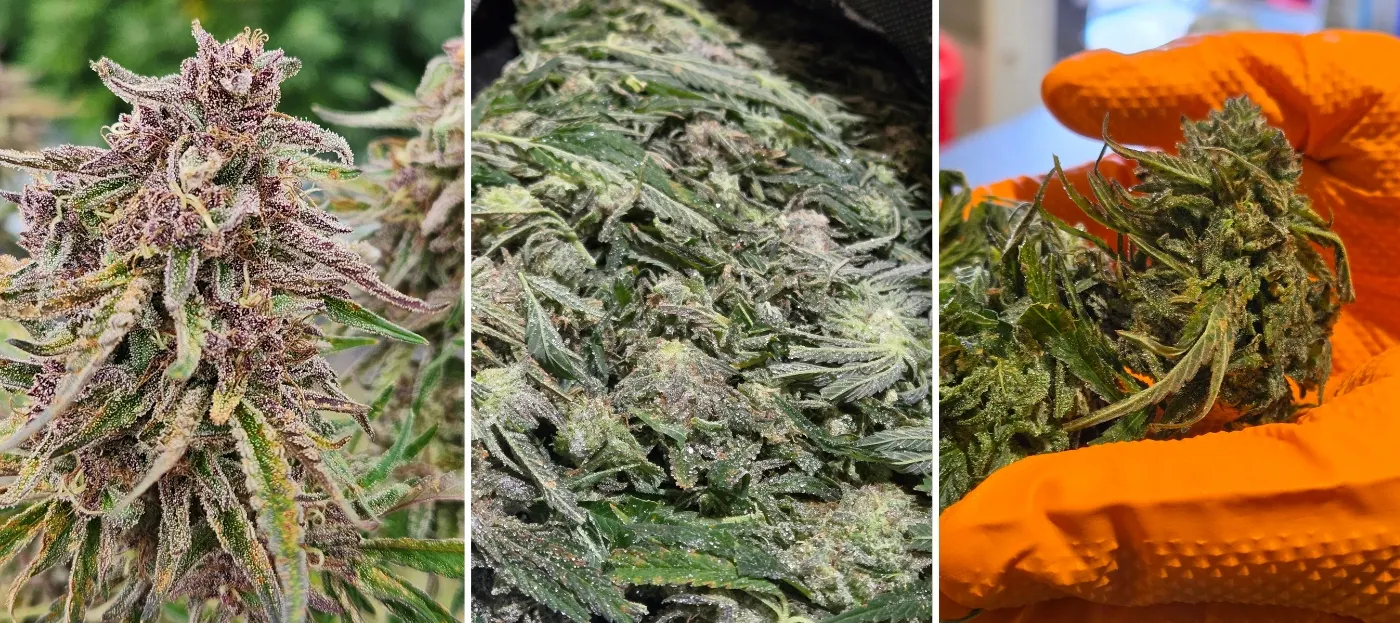
Images: Purple Starfruit plant grown under natural light, late flower (1), fresh frozen Purple Starfruit material right before washing (2, 3), Mokotoke.
Kevin Kuethe, Chief Cultivation Officer at Lume is a big fan of Phylos variety, Mind Melt and the cultivar has earned a solid place in their rotation. At Lume, bubble hash plays a central role, serving as the foundation for nearly all infused products.
“Mind Melt washed at 5.55% and yielded 52 grams of bubble hash per plant—it’s a keeper.”
Phylos Washer Varieties
Phylos has developed a portfolio of varieties selected for strong wash performance, including:
- Cosmic Crunch
- Grape Bubblegum
- Hypnotik
- Mind Melt
- Purple Starfruit
- Pineapple Donut
- Sunny Daze
These varieties have been evaluated using standardized washability methods and selected for their ability to deliver consistent solventless yields.
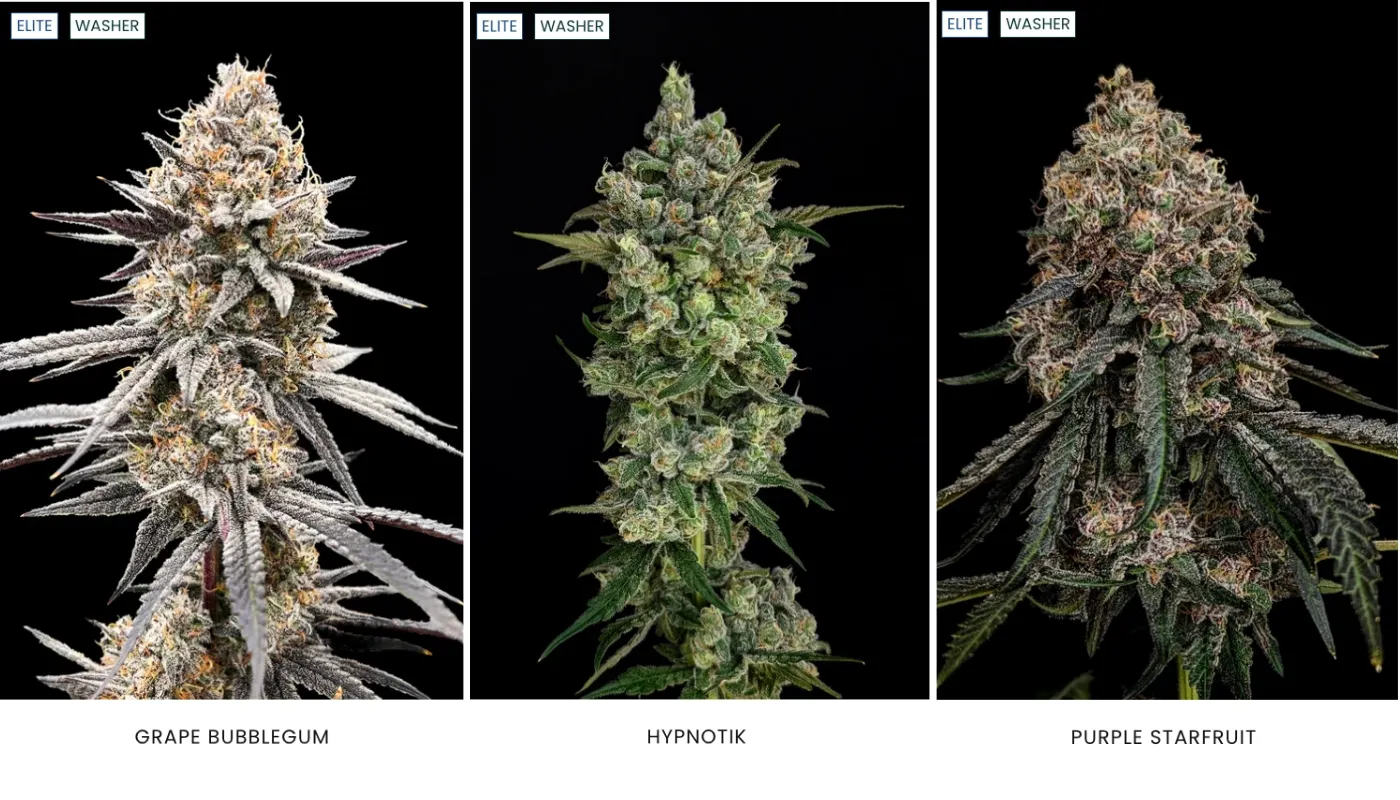
On the Phylos website, varieties that wash well are labeled with a “washer” tag, as shown in the product images below.
Advancing Solventless Through Genetics
As solventless extraction continues to grow, the industry is shifting toward intentional breeding for process-specific traits.
Washability represents a key step in that evolution, bridging plant biology and extraction performance.
By combining phenotypic measurement, standardized testing, and genetic insight, it becomes possible to develop cultivars that:
- Wash efficiently
- Preserve complex metabolite profiles
- Deliver consistent, high-value output
For growers and processors alike, that means better predictability and better product.
To learn more about how Phylos is improving solventless extraction yield through marker-assisted selection, contact the Phylos team at customersuccess@phylos.bio.